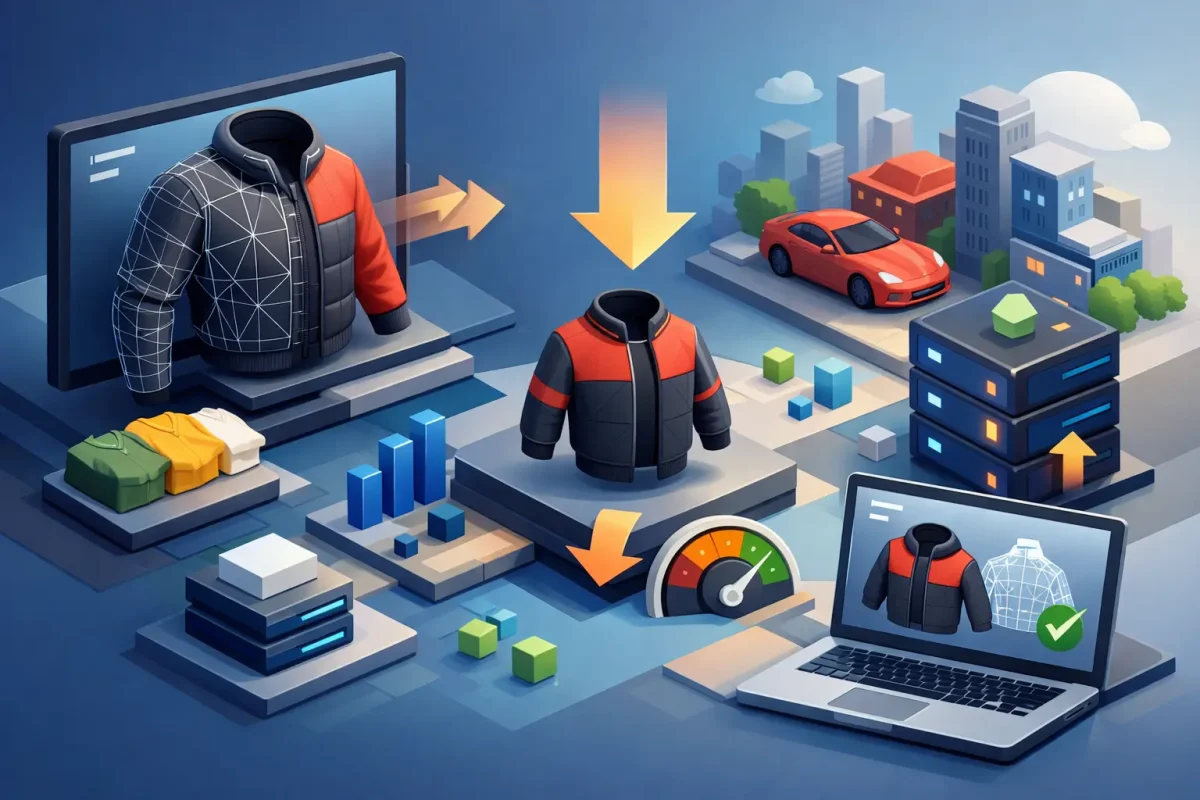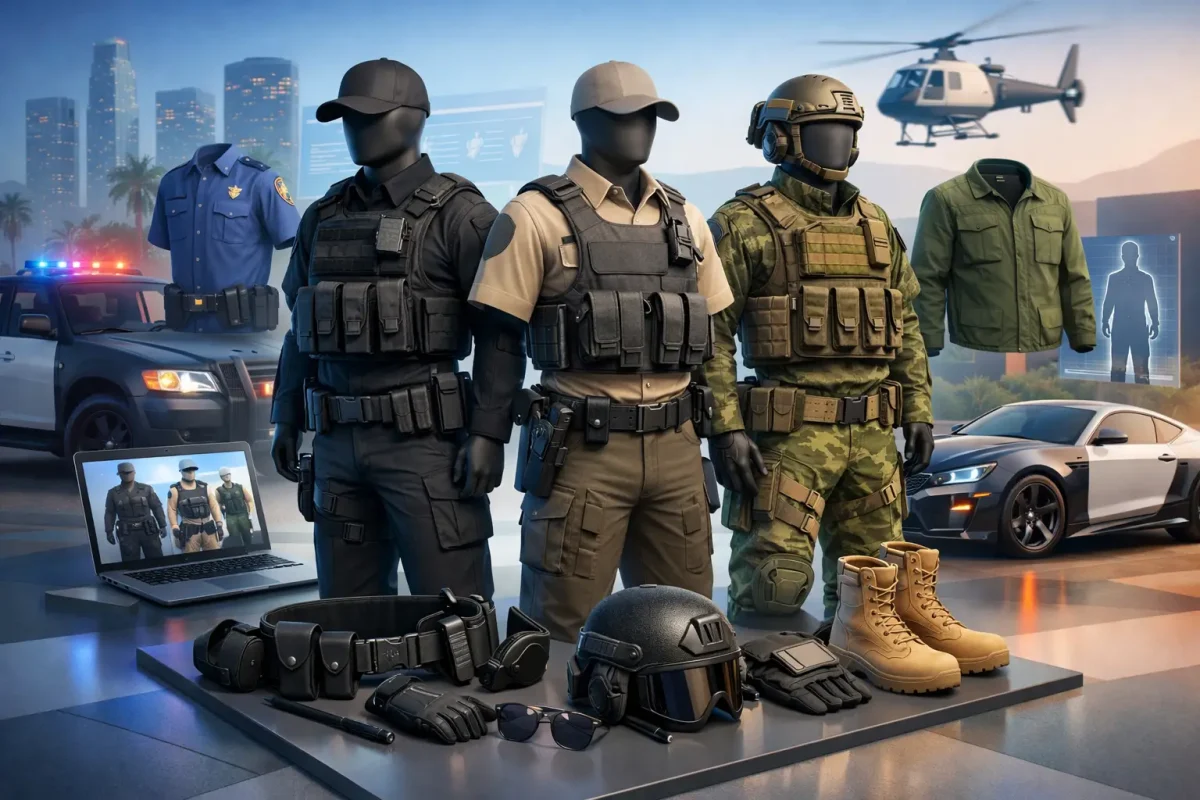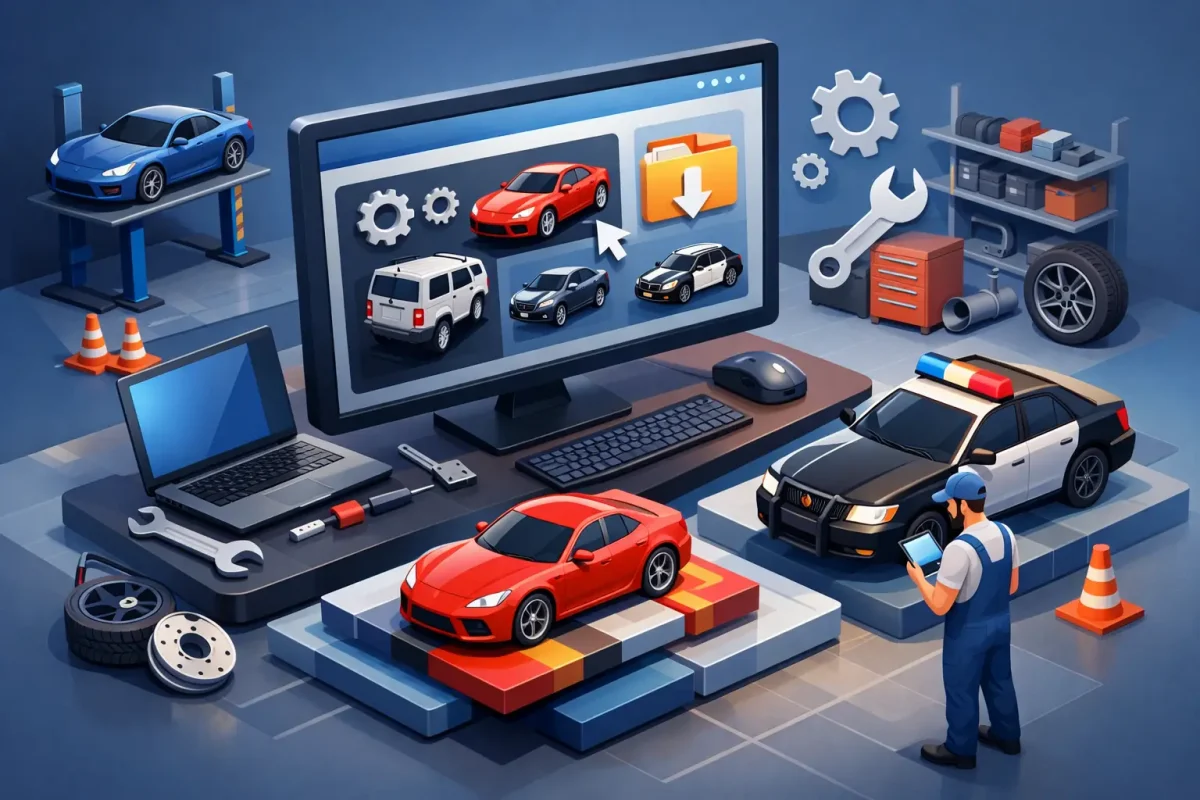

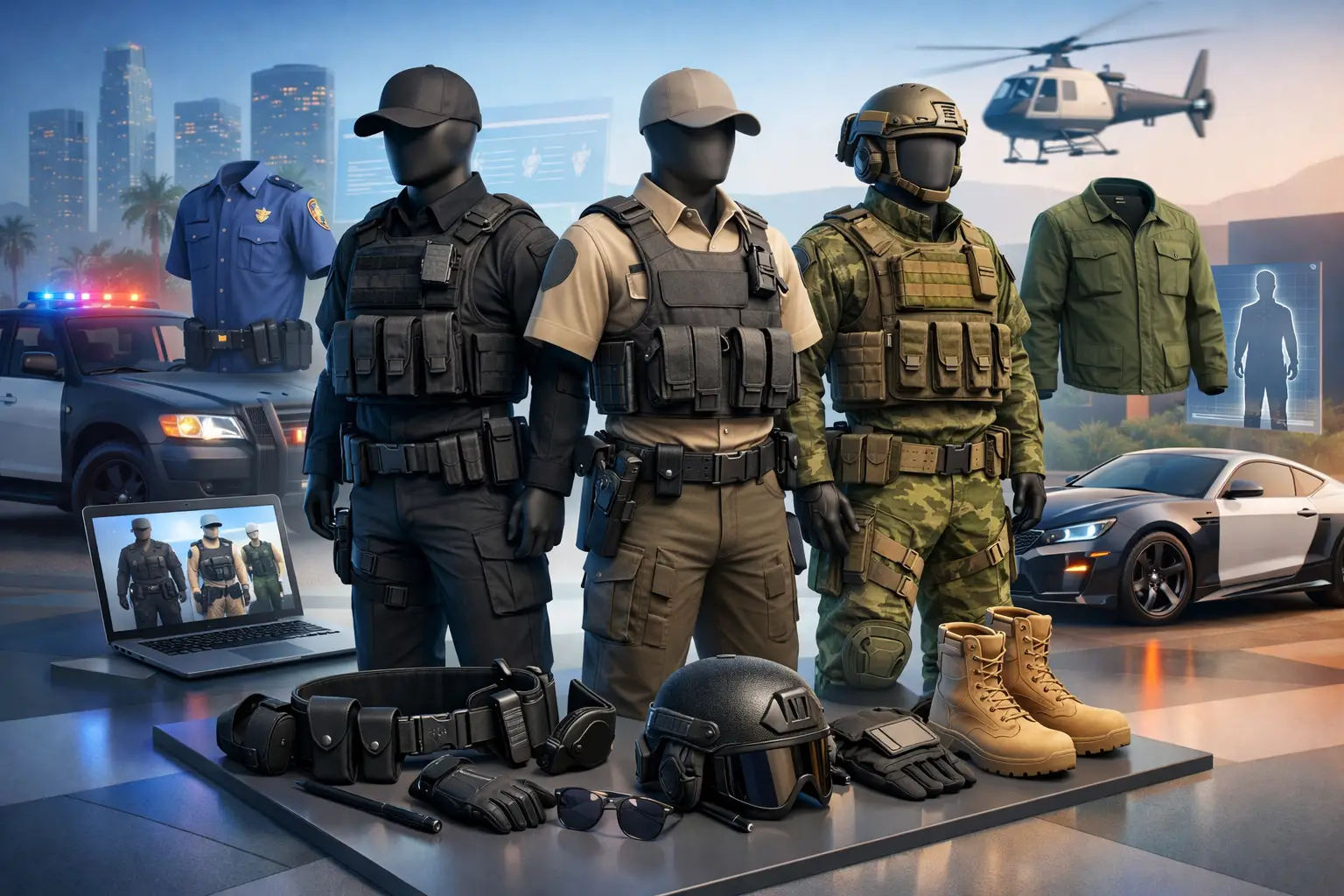
When players open character creation and your uniforms clip, textures fail to load, or Resmon spikes the moment a department goes on duty, the problem usually is not “just clothing.” On a serious RP server, FiveM EUP style clothing affects immersion, job identity, and client performance at the same time. If the pack is poorly built, every outfit change becomes another point of friction for staff and players.
That is why clothing needs to be evaluated like any other production asset. It has to fit your framework, match your server’s tone, stay within compliance expectations, and run efficiently under normal player load. Good-looking screenshots are not enough. Server owners need packs that are FiveM ready, optimized, and predictable in live use.
What FiveM EUP style clothing really needs to do
A clothing pack on an RP server is not only cosmetic. It supports role structure. Police, EMS, security, gangs, civilians, and business staff all need visual separation that players can read instantly. That means consistency matters as much as style.
For most servers, the best FiveM EUP style clothing gives you three things at once. First, it creates a clean visual hierarchy across departments and factions. Second, it avoids branded or risky design choices that can create compliance problems later. Third, it keeps the resource footprint under control so outfitting players does not become a performance tax.
That last point gets underestimated. Clothing is often added late in a build because it feels less technical than scripts or MLOs. In practice, unoptimized clothing can drag down the player experience just as fast as a bad script. High texture counts, inefficient mesh work, poor slot organization, and bloated pack structures all show up where it hurts – load times, streaming, and stability.
Premium vs free FiveM EUP style clothing
Free assets can help with prototyping, and for a test server they may be enough. But there is a clear trade-off. Most free clothing packs are built for broad distribution, not for long-term server operations. They are often inconsistent in quality, incomplete in setup, or poorly optimized for active communities with real concurrency.
Premium packs usually justify the price when they reduce deployment time and maintenance. A properly built asset arrives with cleaner files, more reliable component structure, stronger optimization, and a presentation standard that fits a serious RP environment. That does not mean every paid pack is good and every free pack is bad. It means premium assets are more likely to be built around actual server use instead of simple release volume.
The difference becomes obvious once your community scales. A free pack may look acceptable in isolated testing, then start showing cracks when multiple departments use it at once. Players report invisible items, mismatched variants, or weird clipping on common ped combinations. Staff spend time patching what should have worked on day one. Premium, optimized assets cut down that operational waste.
Why Resmon and resource efficiency matter
Clothing does not always get discussed in performance terms, but it should. Any asset that streams to clients adds weight, and on a busy server those costs stack fast. If your clothing resources are heavy, badly organized, or built with no concern for efficiency, they contribute to the same kind of overall drag that server owners try to avoid everywhere else.
Resmon values are one of the clearest ways to think about asset discipline. While clothing packs are not judged exactly like scripts, the principle is the same: every resource should justify its footprint. A well-optimized clothing pack keeps file structures clean, avoids unnecessary bloat, and reduces avoidable client strain. That is especially important if your server already runs custom vehicles, interiors, map expansions, peds, and multiple gameplay systems.
This is where experienced buyers separate visual quality from production quality. A pack can look impressive in a showcase and still be expensive to run. Good FiveM-ready clothing is built for live environments, not just screenshots. It respects the fact that server owners need room for scale.
What to look for before you add a clothing pack
Start with compatibility. The pack should fit the framework and clothing system your server already uses, or at least be easy to adapt. If integration becomes a manual cleanup project, the real cost of the asset rises quickly.
Then check visual direction. Lore-friendly and unbranded designs tend to hold up better over time, especially on servers that want a clean, consistent world. Overdesigned or heavily branded pieces may look interesting at first but can break immersion fast. TOS-conscious buyers already know that staying on the safe side matters.
After that, look at editability. Server operators rarely keep assets exactly as purchased. Departments change rank structures, communities add custom labels, and faction aesthetics evolve. Editable files save time later. If the pack is locked down too tightly, you may end up replacing it sooner than expected.
Finally, assess optimization discipline. Ask whether the pack feels built for scale. Are the components organized cleanly? Are there unnecessary duplicates? Does it look like a storefront asset designed for real server deployment, or a repack with extra weight and little quality control? Those details matter more than the product thumbnail.
Clothing quality affects roleplay quality
Players notice clothing quality immediately, even if they do not describe it in technical terms. They notice when departments look unified. They notice when civilian fashion feels current without being chaotic. They notice when job-based outfits reinforce progression and status.
They also notice the opposite. If your server has random quality levels across uniforms, streetwear, tactical gear, and business outfits, the world feels stitched together rather than intentionally built. That weakens immersion, and immersion is one of the main reasons players stay.
For server owners, that means clothing should be treated like part of environment design. Just as optimized MLOs make interiors feel believable and optimized vehicles shape the roads, optimized clothing shapes social spaces. It tells players what kind of server they are in before they read a rules page.
Where unoptimized packs create hidden costs
The first hidden cost is staff time. Free or lower-quality assets often demand cleanup, troubleshooting, and repeated player support. That can mean fixing broken variants, correcting naming issues, or reorganizing files for better deployment. None of that grows your server.
The second hidden cost is inconsistency. If every clothing source follows a different standard, your setup becomes harder to maintain. New departments, whitelist roles, and custom factions become more complicated because the underlying content was never aligned from the start.
The third hidden cost is performance headroom. Every inefficient resource reduces your flexibility elsewhere. Maybe the clothing pack works, but now you have less room for another interior, a custom script, or more map content. That is a poor trade if the clothing could have been sourced in a cleaner format from the beginning.
This is why serious operators tend to move toward premium, optimized assets as their server matures. The value is not only visual polish. It is lower friction across deployment, support, and long-term scaling.
Building a better stack with FiveM-ready clothing
The strongest servers do not buy assets one by one with no plan. They build a stack. Clothing should match your broader content strategy – your departments, your city tone, your civilian culture, your gang ecosystem, and your technical budget.
That is where specialized marketplaces have an advantage. When a provider focuses on FiveM-ready assets across categories, buyers can source content with a more consistent standard for optimization and usability. For operators who want fewer integration problems and more predictable deployment, that matters. FivemCore fits that buying pattern because the value is not only catalog size. It is having premium assets built around readiness, editability, and server-scale use.
If you are selecting clothing for a new build, think beyond launch day. Ask whether the pack will still make sense once your population grows, once departments expand, and once players start demanding more identity options. A good pack should not force you into a rebuild six weeks later.
If you are replacing old assets, be practical. The right upgrade is not the loudest or the largest pack. It is the one that gives you clean visuals, efficient performance, easier management, and room to keep building. That is what premium FiveM EUP style clothing is supposed to do – support the server, not compete with it.