
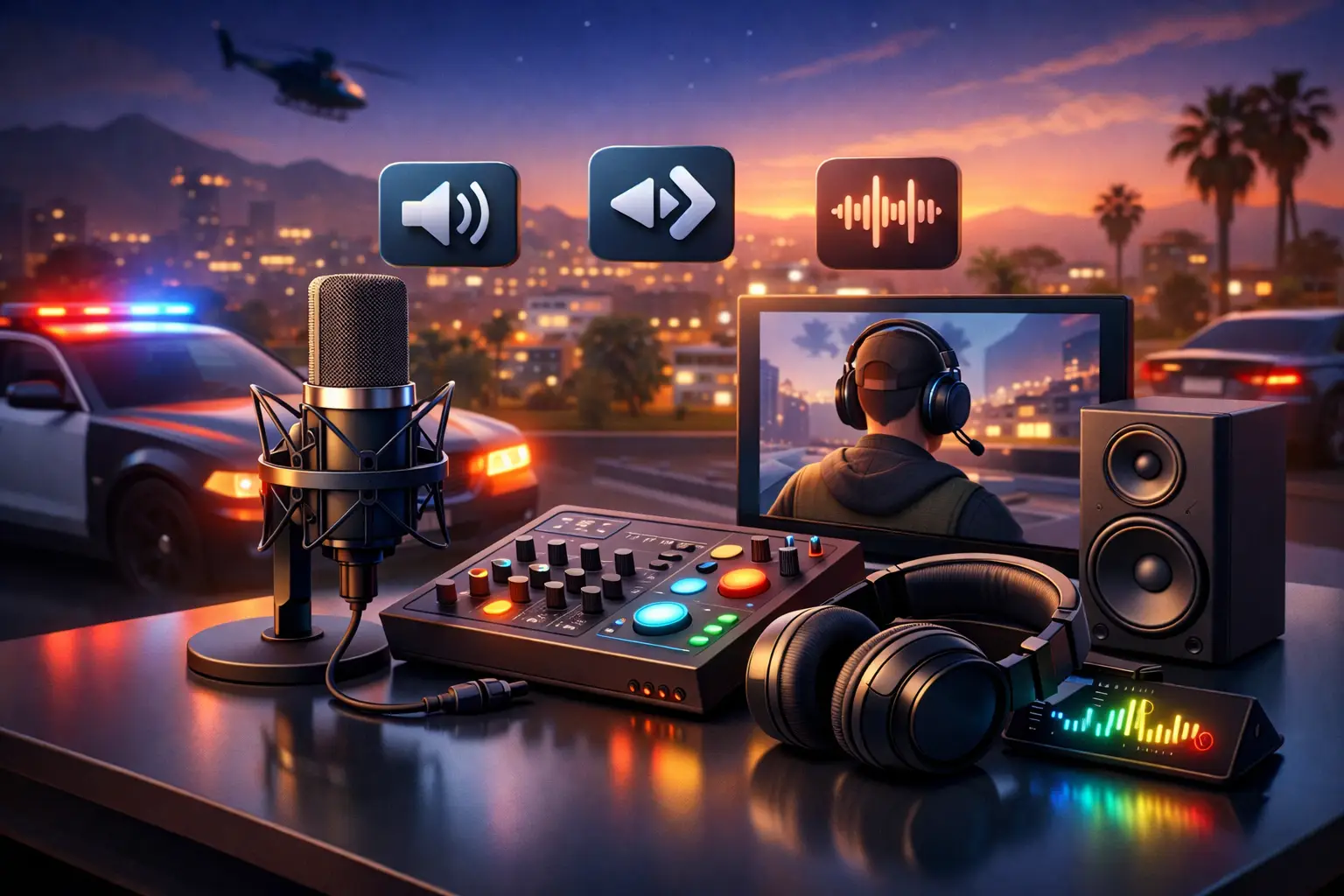
When players notice your audio, it usually means something is wrong. Sirens are too loud, gunshots clip across the city, vehicle sounds feel mismatched, or every custom resource adds one more layer of noise and one more chance for performance issues. That is why FiveM sound packs matter more than many server owners expect. They are not just cosmetic upgrades. The right pack improves roleplay immersion, makes scenes feel more believable, and keeps your server build consistent without adding unnecessary overhead.
For serious RP servers, sound is part of infrastructure. It affects how pursuits feel, how emergency scenes read, how vehicles are perceived, and how polished the entire experience seems to new players. A premium pack that is built for FiveM, optimized for deployment, and tested for clean integration will usually outperform free alternatives in the areas that actually matter – clarity, consistency, Resmon discipline, and long-term maintainability.
What good FiveM sound packs actually change
A sound pack can touch far more than engine notes. Depending on the asset, it may replace or enhance vehicle audio, weapon audio, ambient effects, UI cues, and specialty sounds used in roleplay scenarios. On paper, that sounds simple. In practice, every sound change has to fit your server’s identity, your existing resource stack, and your performance budget.
For example, a law enforcement-heavy server may prioritize siren clarity, radio-style tones, and realistic pursuit audio. A civilian-focused server may care more about refined engine profiles, street ambience, and believable traffic sound. A mixed economy server with a large custom vehicle catalog usually needs broad compatibility first, because inconsistent audio across custom imports breaks immersion fast.
The best packs are not just louder or more aggressive. They are cleaner. They respect sound balance, avoid distortion, and feel intentional across different gameplay contexts. That is the difference between an asset that sounds impressive in a showcase clip and one that still works after hundreds of hours of live server use.
Free vs premium FiveM sound packs
There is nothing wrong with testing free assets while prototyping a server. Many builders start there. The problem shows up when those temporary solutions become part of a production environment.
Free sound packs are often inconsistent in quality. One file may be solid, while another is poorly normalized, badly looped, or not mapped cleanly to the correct vehicles or events. Documentation is frequently limited. Optimization is hit or miss. Some assets were made for personal use, not for scaled public deployment on an active RP server.
Premium FiveM sound packs usually justify their price in three ways. First, they are packaged for faster installation and cleaner implementation. Second, they are more likely to be optimized for real server use, which matters when you are already balancing scripts, vehicles, MLOs, and clothing resources. Third, they tend to be built with consistency in mind, so you are not spending extra time correcting volume mismatches or replacing broken files later.
That does not mean every paid pack is automatically good. It means serious buyers should evaluate them the same way they would evaluate scripts or vehicles – based on performance, compatibility, editability, and deployment readiness.
Why optimization matters more than novelty
A lot of server owners get pulled toward sound packs because of the immediate wow factor. A custom exhaust note or aggressive engine profile can sound impressive in a product preview. But once that asset is live, novelty wears off quickly and technical quality becomes the real issue.
If a sound resource is poorly structured, it can contribute to bloated resource loads, conflict with other assets, or create unnecessary troubleshooting work during updates. On a larger server, that cost compounds. You are not only paying for the asset itself. You are paying with integration time, QA time, and the risk of player-facing issues.
This is where optimization and resource efficiency matter. Well-built assets are easier to organize, easier to deploy, and easier to maintain. They are less likely to create edge-case problems when combined with custom vehicles or other audio-related resources. And while sound packs are not always the biggest Resmon concern compared to heavier scripts, disciplined asset management still matters. Every unoptimized resource adds pressure to the overall build.
For server operators who care about clean Resmon values, the goal is simple: use assets that do their job without creating unnecessary drag elsewhere. Sound should improve the environment, not become another source of avoidable instability.
How to evaluate FiveM sound packs before you buy
The first thing to check is what the pack actually covers. Some products focus narrowly on one area, such as a single engine class or siren type. Others are broader and meant to support a larger portion of your server. Neither approach is automatically better. It depends on your server build and whether you need targeted upgrades or category-wide consistency.
The second priority is compatibility. If your server uses custom add-on vehicles, branded or lore-friendly fleets, or a layered emergency setup, your audio assets need to match that environment. A great sound pack that only works cleanly on a small subset of vehicles may not be the right purchase for a production server.
Third, check how deployment-ready the product is. Clean folder structure, clear install logic, and sensible file organization save real time. That matters even more for teams managing multiple developers or frequent content updates.
Fourth, look at editability. Some operators want a ready-to-use package and nothing more. Others need the flexibility to adapt sounds to a custom fleet or a specific roleplay standard. Editable assets provide more long-term value if your server is expected to evolve.
Finally, consider compliance. In the FiveM market, this is not optional. Assets should be built and sold with a clear understanding of platform expectations, licensing, and TOS-safe usage. A sound pack that creates uncertainty on the compliance side is not a premium solution, no matter how good the preview sounds.
Where sound packs fit in your server stack
Audio should not be treated as an isolated purchase. It works best when it supports the rest of your server content.
If you are building a police-focused environment, sirens, interceptor engine sounds, and pursuit ambience should align with your vehicle fleet, EUP, and map design. If you are running a high-end civilian economy server, refined performance car sounds should match the quality of your imports, tuning systems, and dealership presentation. If you are aiming for a lore-friendly city, your sound choices should reinforce that direction instead of making the environment feel stitched together from unrelated assets.
This is why serious server owners tend to buy with a systems mindset. A premium sound asset does more when it is part of a consistent content strategy. That is also why storefronts that specialize in FiveM-ready content offer more value than random one-off sourcing. You are not just buying a file. You are reducing friction across the entire build process.
Common mistakes server owners make
One common mistake is over-customizing audio too early. If your vehicle base is still changing, your scripts are still being swapped, and your fleet structure is not finalized, heavy audio customization can create rework. Build the core first, then refine the sound layer.
Another mistake is chasing realism without considering roleplay readability. Hyper-aggressive or ultra-loud audio may seem realistic in isolation, but it can reduce clarity in active scenes. Players need to distinguish what they are hearing. Audio should support gameplay communication, not bury it.
A third mistake is ignoring maintenance. Even a good sound pack should be reviewed after major server updates, vehicle additions, or changes to related resources. The more scaled your server becomes, the more valuable it is to use assets that remain clean and predictable over time.
Choosing the right standard for your server
Not every community needs the most extensive audio package on the market. Smaller servers may benefit more from a focused, high-quality pack that improves key categories without adding complexity. Larger communities with custom fleets and multiple departments usually need broader coverage and better standardization.
That is where premium marketplaces such as FivemCore fit naturally. For buyers who want optimized, FiveM-ready assets instead of inconsistent testing files, curated quality matters. The right sound pack should install cleanly, fit your server’s roleplay style, and hold up under real use – not just in a preview.
If your server already looks polished but still feels flat in motion, audio is often the missing layer. The right upgrade is not the loudest one. It is the one that sounds correct, performs cleanly, and makes every scene feel more complete.